
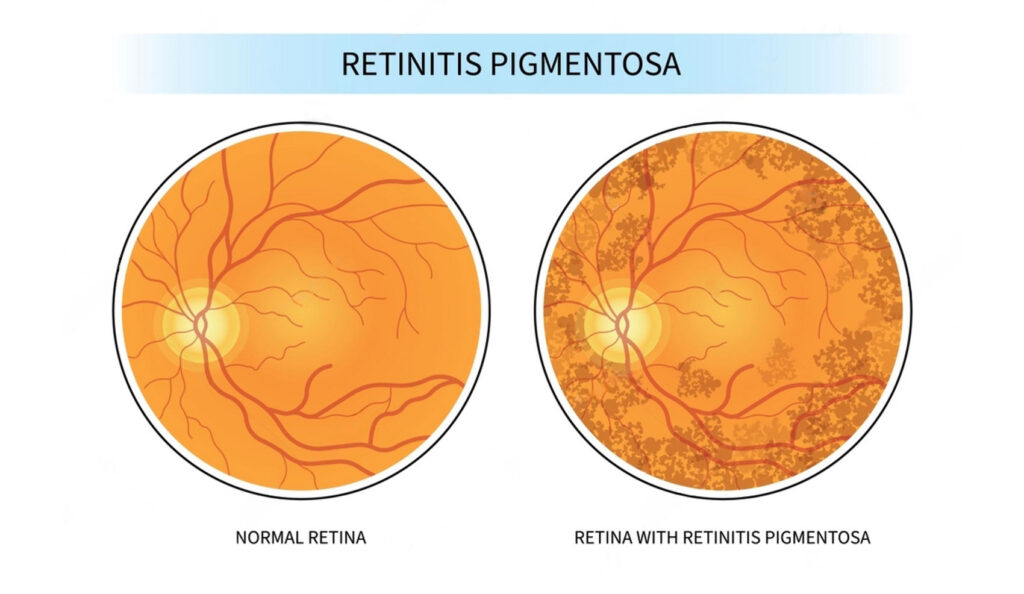
Our eyes allow us to experience the world — from the colors of nature to the faces of people we love. But for some individuals, vision slowly fades due to a rare condition known as Retinitis Pigmentosa (RP).
Retinitis Pigmentosa is a progressive eye disease that gradually damages the retina, the light-sensitive layer at the back of the eye. Over time, this damage can lead to severe vision loss and even blindness.
Currently, there is no definitive cure for this condition. Because of this, scientists continue exploring new approaches that may help protect eye cells and slow the progression of the disease.
In recent years, researchers have started investigating the potential role of hydrogen molecules and hydrogen water as a supportive approach for protecting eye health.
What Is Retinitis Pigmentosa?
Retinitis Pigmentosa (RP) is a genetic retinal degenerative disease that affects the photoreceptor cells in the eye. These cells are responsible for detecting light and sending visual signals to the brain.
According to research, the condition affects approximately 1 in every 4,000 people worldwide. In individuals with RP, the photoreceptor cells gradually deteriorate and die. As these cells disappear, the retina becomes less able to process visual information, causing progressive vision loss.
Because retinal cells cannot easily regenerate, protecting these cells has become a major focus of modern eye research.
Common Symptoms of Retinitis Pigmentosa
The symptoms of Retinitis Pigmentosa typically develop slowly over many years.
Early Symptoms
The earliest sign is usually night blindness. Patients may notice:
- Difficulty seeing in dim environments
- Trouble adjusting from bright to dark areas
- Difficulty driving at night
Night blindness occurs because the rod photoreceptor cells, which are responsible for vision in low-light conditions, are usually affected first.
Mid-Stage Symptoms
As the disease progresses, patients may develop narrowing of the visual field.
This is often described as tunnel vision, where the person can see only a small central portion of their surroundings.
Peripheral vision gradually disappears, making daily activities such as walking in crowded places or navigating unfamiliar environments more difficult.
Late-Stage Symptoms
In advanced stages, the disease can lead to:
- Severe vision impairment
- Loss of central vision
- Significant visual disability
This progressive nature is why early research and protective strategies are so important.
What Causes Retinitis Pigmentosa?
The disease is complex, and several factors are involved in its development.
1. Genetic Mutations
Retinitis Pigmentosa is primarily caused by genetic mutations that affect how retinal cells function and survive.
Different gene mutations can lead to different forms of the disease, which explains why symptoms and progression rates vary among patients.
2. Oxidative Stress
Another important factor in the disease process is oxidative stress.
Oxidative stress occurs when the body produces more free radicals than it can neutralize. These unstable molecules can damage:
- DNA
- proteins
- cell membranes
Studies have suggested that oxidative stress plays a key role in the degeneration of photoreceptor cells in RP.
Reducing oxidative damage has therefore become an important target in research.
3. Photoreceptor Cell Death
As oxidative damage accumulates, retinal cells may undergo apoptosis, or programmed cell death.
Once a large number of photoreceptor cells are lost, vision gradually deteriorates.
This is why protecting these cells from oxidative damage is considered a promising research direction.
Why Are Scientists Studying Hydrogen?
In recent years, molecular hydrogen (H₂) has gained attention in medical research.
Hydrogen molecules are extremely small and can easily penetrate biological membranes, allowing them to reach different tissues in the body.
Studies suggest hydrogen may have several beneficial properties, including:
- Antioxidant effects
- Anti-inflammatory activity
- Anti-apoptotic (anti cell-death) effects
- Cellular protection
Because oxidative stress plays a major role in retinal degeneration, researchers have begun investigating whether hydrogen therapy or hydrogen water may help support retinal health.
Clinical Study on Hydrogen-Rich Water
To explore whether hydrogen water could support retinal health, researchers conducted a small clinical study involving 13 patients with Retinitis Pigmentosa.
Participants were asked to drink hydrogen-rich water twice daily for four weeks. During the study period, researchers monitored several eye health indicators, including vision clarity and retinal function.
The goal was to see whether hydrogen molecules could provide any supportive benefits for the retina.
Study Results
After four weeks, researchers observed several encouraging findings.
- Patients showed a slight improvement in visual acuity.
- Some tests indicated better retinal functional responses to light stimulation.
- No negative effects on eye pressure or retinal structure were observed.
Although the improvements were modest, the findings suggest that hydrogen-rich water may help support retinal function.
Final Thoughts
Retinitis Pigmentosa remains a challenging condition with limited treatment options. However, ongoing research is expanding our understanding of potential supportive strategies.
Emerging studies suggest that hydrogen molecules and hydrogen-rich water have promising antioxidant and protective properties that could benefit cellular health.
These findings highlight an exciting area of scientific exploration that contribute to future approaches in protecting vision and eye health.
Reference
Chen, X., Chen, Y., Lin, X., Ye, Q., Zhang, S., Wang, Y., Chen, M., & Yan, W. (2023). The clinical research on the effect of hydrogen-rich water on primary retinitis pigmentosa. Heliyon, 9(10), e20671. https://doi.org/10.1016/j.heliyon.2023.e20671
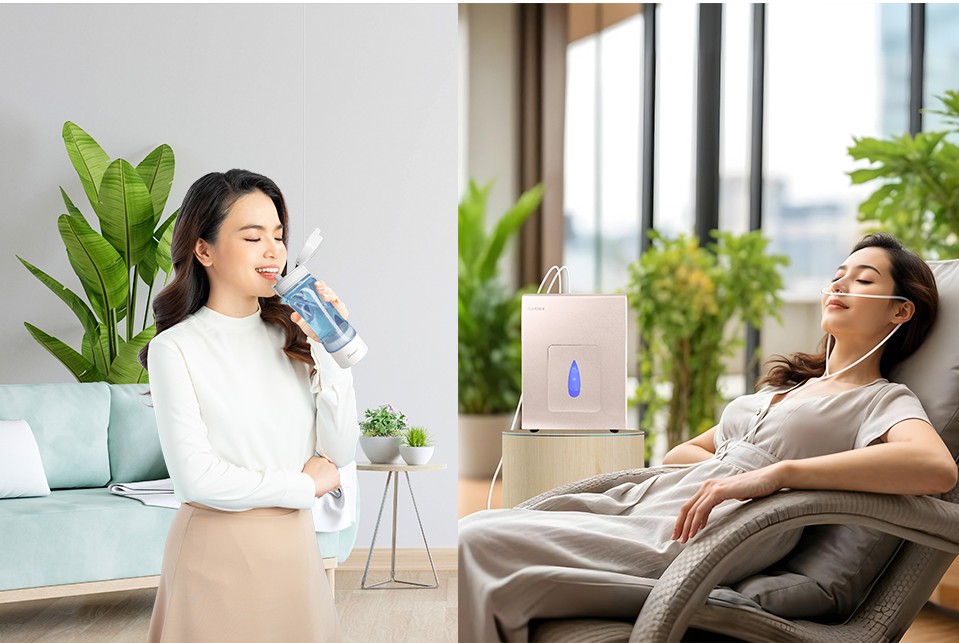
SOYOSHI Hydrogen Water Generator
- Generates over 1,200 ppb hydrogen water in 3 minutes
- Hydrogen and oxygen separation technology
- Certified by Japan’s Ministry of Health
- Backwash function for self-cleaning
- Bottle made of U.S. Tritan™ (BPA-Free)
- U.S. FDA-Compliant materials
- Free from plasticizers & heavy metals
- Portable & travel-friendly
- SGS-Certified
SOYOSHI Aqua vitalité Oxy-Hydrogen Inhaler
- 900cc/min Hydrogen-Oxygen Flow
- Industry-Leading 5N-Grade Oxy Hydrogen Tech (99.999% Purity)
- Advanced N117 Proton Exchange Membrane (PEM)
- Supervised by Japan’s Orient Pharmaceutical Co., Ltd.
- Certified BY Japan’s PSE Safety Standards
- SGS-Certified | Heavy Metal & Impurity-Free
- Patented Air-Water Separation for Safe Inhalation
- Advanced Active Cooling System
- Medical-Grade Power Supply
- Exclusive Patented Exterior Design
SOYOSHI
- 10 years R&D by 7 scientists
- Certified by Japan’s Ministry of Health
- Certified by Japan’s PSE
- Natural Health 2019 Award
- Available in Japan, Taiwan, Malaysia, China, India, etc